
San Onofre Shut Down 1/31/2012

San Onofre Unit 2 and 3 are both down today (1/31/2012) and yet we still have plenty of power without this nuclear plant running. Unit 2 is shut down for maintenance and Unit 3 is shut down after a possible leak.  Tell me again why we are risking our lives, the environment and the future of California for energy we obviously can live without?

Stop this unnecessary risk. Sign the California Nuclear Initiative to shut down California’s two nuclear plants http://californianuclearinitiative.com/

In the San Clemente Patch February 1, 2012 article below, Edison mislead the public, stating there was no radiation leak into the atmosphere.  The Edison January 31, 2012 press release said the same thing and Edison’s Gil Alexander said the same thing February 1st in this KPBS midday interview 

Edison did not admit to the leaks into the environment for over 17 days.  Edison issued a press release February 17, 2012 admitting to the radiation leaks into the atmosphere.  They provided these numbers in the press release, but since they never really measured the release, this is only an “estimate”.  Hiding for 17 days that there were radioactive leaks into the atmosphere does not build trust. Why would anyone trust Southern California Edison to tell the truth or to competently manage a nuclear facilities?

The radioactivity released to atmosphere during the steam generator tube leak was barely measurable – 4E-5 millirems or 0.00004 millirems — which is 200 times less than you would receive by having a smoke detector in your home for a year. This updates our initial estimate of 7E-7 millirems or 0.0000007 millirems that we provided to the NRC.

The leak started in the afternoon, but the reactor was not shutdown until operators starting shutting down Reactor Unit 2 manually at 5:31 pm.  It did not automatically shut down. A similar San Diego Tribune January 31, 2012 report by Morgan Lee had similar reportsNBC San Diego reported February 1, 2012 that their may be a leak, but they didn’t know how much, yet they provided an “estimate” to the NRC.

Nuclear Regulatory Commission spokesman Victor Dricks says a small amount of radioactive gas “could have” escaped the San Onofre Nuclear Generating Station on the northern San Diego Coast.

Southern California Edison spokesman Gil Alexander told The Associated Press on Wednesday that the amount would have been “extremely small” and possibly not detectable by monitors.

The company and federal regulators say the release would not have posed a safety risk for the public.

Perhaps, a very small amount of radiation leaked into the atmosphere, and if that were the case it’s not even showing up on our detection,” Alexander said.

San Onofre Nuclear Reactor Shut Down After Leak – San Clemente Patch, Adam Townsend, Tuesday, February 1, 2012

The San Onofre Nuclear Generating Station shut down its Unit 3 Tuesday afternoon because sensors detected a leak in the unit’s steam generator tubes.

“The potential leak poses no imminent danger to the public or plant workers,” according to a Southern California Edison statement. “There has been no release to the atmosphere.”

San Onofre spokesman Gil Alexander said sensors tripped this afternoon, showing mildly radioactive water was leaking from one of two water systems in the steam generator apparatus of Unit 3….

Alexander said it is the system with the contaminated water that shows evidence of leaking. All leakage is contained within the thick concrete containment dome, he said.

The plant is set to shut itself down at the first sign of problems, that plunged Southern California into darkness in September.

But this leak was minor enough that it did not trigger the automatic shutdown of the unit; plant workers initiated it manually as a precaution at 5:31 p.m. Tuesday, Alexander said.

Alexander said Tuesday night that the dome is closed off and technicians are cooling down the reactor, a process that takes about 12 hours. After the cool-down, a crew will enter the dome, assess the leak and take steps to begin repairing it.

Unit 2 is currently offline for a planned maintenance, refueling and technology upgrade outage.

SCE has ample reserve power to meet customer needs while Unit 3 is offline, according to a company spokesman, and the Nuclear Regulatory Commission was immediately informed of the shutdown.

New 640-ton steam generators were installed in 2010 in the north dome and the ones in the south dome were replaced in 2009 as part of a .
Posted in Calif Nuclear Initiative, Energy Options, Steam Generator | Tagged , , , | Leave a comment

ACTION ALERT – Call NRC

Please call the Nuclear Regulatory Commission (NRC) DC office today at 1-800-368-5642 or 301-415-7000 and tell them what you think of this idea.

Residents Organized for Safe Environment (ROSE) Statement of Concern: ROSE believes that the NRC’s stated alternative to Change the Waste Confidence away from the small step approach to the long-term Waste Confidence program for 200 years to make nuclear power plant sites into nuclear waste dumps for 200 years is shortsighted and completely without regard for the safety of the millions of citizens who populate the areas around these power plants.

This type of decision by the NRC, demands that the public take action to secure its own safety from the hazards of such a nuclear waste dump in their vicinity wherever it is located. It calls into question the very mandate itself of the NRC “Protecting People and the Environment” and leads us to the conclusion that the NRC is no longer capable of Protecting the People and the Environment. This may mean it is time to consider disbanding the NRC and forming a new protective agency led by the citizens themselves who have no vested interest in protecting the nuclear industry.

NRC Draft Report for Comment Dec 2011 Waste storage policy.Background and Preliminary Assumptions For an Environmental Impact Statement.—Long-Term Waste Confidence Update. States 6. Alternatives Under the National Environmental Policy Act

“The proposed action is a change to the Commission.’s current Waste Confidence decision and rule, which requires the Commission to revisit the issue of Waste Confidence every five to ten years. As part of this process, the Commission has revised Waste Confidence twice since 1984, and each time has expanded the temporal scope of its analysis by a few decades. This long-term Waste Confidence update would move away from this small-step approach, and would extend the temporal scope of Waste Confidence by as many as 200 years. The EIS will include an analysis of the impacts of four storage scenarios in order to assess the magnitude and range of impacts and the safety of extended storage. Section 8 of this report discusses these scenarios. As with the current Waste Confidence rule and decision, the Waste Confidence EIS will generically describe the potential impacts of extended storage and will assume that the storage of spent nuclear fuel will continue to be a regulated activity in the future. Unlike the current Waste Confidence rule and decision, this long-term Waste Confidence EIS will not require reconsideration of a possible update to the rule and decision every five to ten years. The no-action alternative is to continue to review the Waste Confidence decision and rule for updates every 5 to 10yrs”

http://residentsorganizedforasafeenvironment.wordpress.com/

Posted in Action Alert, NRC, Nuclear Waste | Tagged | Leave a comment

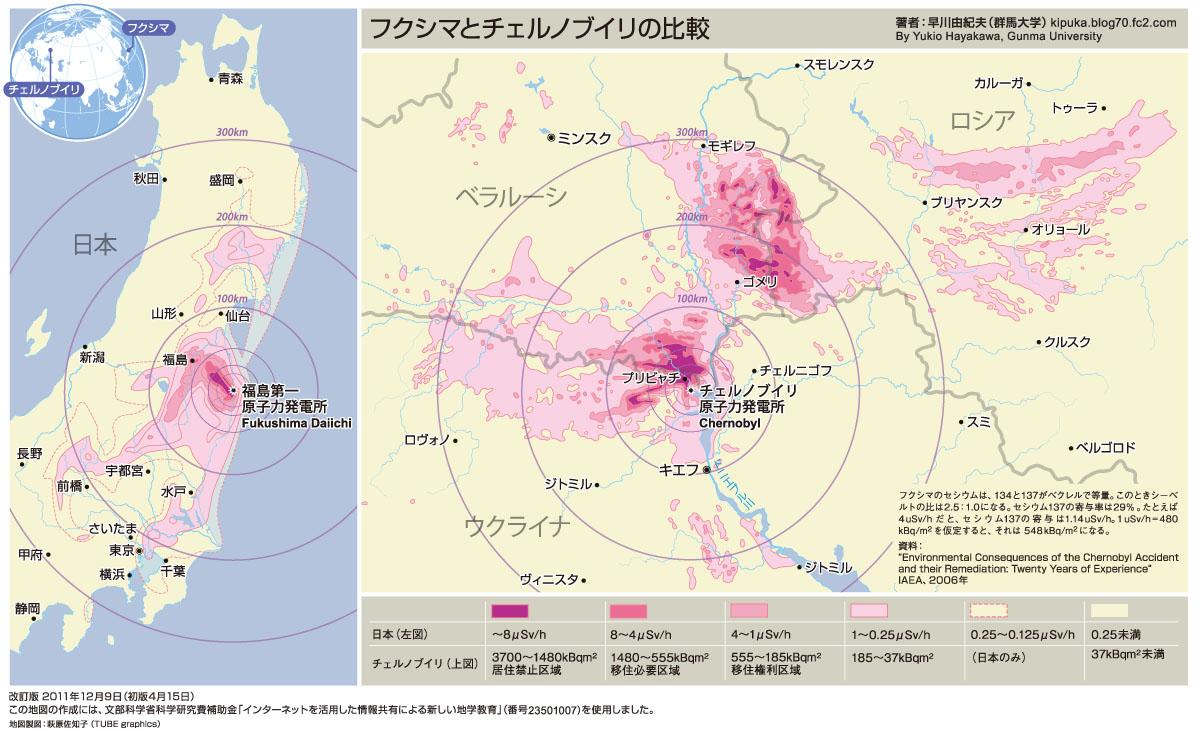
Fukushima and Chernobyl radiation maps

Radiation maps of Fukushima and Chernobyl shows levels of radiation spreading beyond 186 miles (300 km). Radiation is traveling around the world.

Fukushima and Chernobyl radiation spreading beyond 186 miles (300 km)

Source: Professor Yukio Hayakawa, geologist and volcanologist, Gunma University

Posted in Chernobyl, Fukushima, Radiation Monitoring | Tagged , | Leave a comment

San Onofre to push more power with turbine upgrades – is this safe?

The San Onofre Nuclear Power Plant has embarked on a series of upgrades that will allow the plant to increase its power output by about 2% over it’s original design. The Nuclear Regulatory Commission (NRC) refers to this as a “power uprate” of the reactors.

Two new high-pressure steam turbines will replace existing ones. They will generate about 48 more megawatts of power — enough to support about 31,000 average-sized homes.  The first will be installed later this month when the Unit 2 reactor is shut down for refueling.

This should bring increased profits to Southern California Edison, but will it be at the risk of our safety?

In an uprated reactor, more neutrons bombard the core, increasing stress on its steel shell. Core temperatures are higher, lengthening the time to cool it during a shutdown. Water and steam flow at higher pressures, increasing corrosion of pipes, valves and other parts.

“This trend is, in principle, detrimental to the stability characteristics of the reactor, inasmuch as it increases the probability of instability events and increases the severity of such events, if they were to occur,” the NRC Advisory Committee on Reactor Safeguards, which is mandated by Congress to advise the NRC, has warned.

According to the NRC, some uprated reactors have had serious safety problems.

“The greatest concern is loose parts that you can’t find,” John Sieber, a nuclear engineer on the NRC advisory committee, said during a 2004 meeting. “Are they in the bottom of the reactor vessel? …. Is it floating around where it can damage internal parts of the core?”

The NRC allows companies to include increased containment vessel pressure in their safety calculations. But factoring in pressure buildup “represents a decrease in the safety margin available to deal with a phenomenon subject to large uncertainties,” the agency’s safety advisory committee wrote in a March 18, 2009, letter to the NRC.

Forcing regulators to show that the safety system would work without the pressure buildup would offer an extra layer of protection against “potential melting of the core,” the letter said. However, this alternative would require plant modifications so costly that companies claim it would not make economic sense to uprate.

For the U.S. nuclear industry, uprating is one of the cheapest ways to add power to the grid.

For more information see NRC Problems.

Posted in NRC | Tagged , , , , , | Leave a comment

Vote “Yes” in SC Times Poll – Support Calif. Nuke Initiative

Please go to the San Clemente Times website and vote “yes” in their San Clemente Times Reader Poll that asks “Will you support the ballot initiative to close nuclear power plants?”

The Reader Poll is on the left-hand side of their website.

Let’s show the public there is reason to be concerned about unsafe nuclear plants.

And if you haven’t done so already, please download and sign the California Nuclear Initiative petition.

Thanks!

Posted in Calif Nuclear Initiative | Tagged , | 1 Comment

CNI Poster

CNI Poster 8.5" x 14"

Set printer to "legal size" paper before printing

A California Nuclear Initiative poster is available to assist with petition signature gathering and to post at businesses and other locations.

It’s legal size (8.5″ x 14″), so make sure to set your printer to “legal size” paper before printing. The poster has two pages.  The second page is a Safety Allegations Chart.  Print either page or print both back-to-back. To print, click on the poster image.


Posted in Calif Nuclear Initiative | 1 Comment

Vote “yes” in this Santa Cruz Patch poll to shut down California nuclear reactors

Please take this Santa Cruz Patch poll:

Should California Ban Nuclear Reactors?

Vote “yes, the perils outweigh the benefits”.

Let’s spread the message and grow support for the California Nuclear Initiative.  Our future may depend on it.

Also, learn more about the initiative author, Ben Davis, Jr in this article.

12/19/11 Santa Cruzan Behind Initiative to Dismantle California Nuclear Power

Posted in Calif Nuclear Initiative, How to Help | Tagged , , , | 2 Comments

Training for Signature Gathering

Classroom Training for Signature Gatherers

Learn the ins and outs of successful signature gathering and the rules we must follow when collecting signatures.

The training is sponsored by the California ballot initiative to label genetically modified food (LabelGMO.org). They also need petition circulators.  They are concerned about genetically modified food. We’re concerned about genetically modified people and food.

To locate a free training event in your area, click here.

Video Training for Signature Gatherers

Watch this video to learn tips for successful signature gathering.  This is for a Washington initiative campaign, but the signature gathering tips are applicable to our initiative.  It’s very short, so will not take much time to watch and is actually very entertaining.

Written Instructions for Signature Gatherers

For written instructions and a copy of the California Nuclear Initiative petition, go to the  CNI Petition page.

Posted in Calif Nuclear Initiative, Events, Training | Tagged , | Leave a comment

“If the NRC does not do its job, the American people will demand the ultimate protection – the shutdown of old nuclear power plants…”, says Senator Barbara Boxer to NRC Commissioners

Senator Barbara Boxer on 12/15/2011 warned the NRC Commissioners:

 “Let me tell you what happens when people lose confidence in the NRC and the nuclear industry. Right now, there is a petition being circulated for a ballot initiative that would effectively shut down the two nuclear power plants in California. I believe we will see more of that across the country if America doesn’t have confidence in the NRC.

If the NRC does not do its job, the American people will demand the ultimate protection – the shutdown of old nuclear power plants that have similar characteristics as the Fukushima plant.”

Please help gather signatures for the California Nuclear Initiative mentioned in Senator Barbara Boxer’s statement to the NRC. The Nuclear Regulatory Commissioners, who are responsible for protecting the safety of the public and the environment against a nuclear disaster, have not been doing their job for years. And the elected officials responsible for protecting us and the financial health of California have not been effective in doing their job to protect us. It’s up to us to protect ourselves. Please sign the California Nuclear Initiative petition now. 

Here is Senator Boxer’s complete opening statement to the Commissioners.

Joint Hearing: Full Committee and Subcommittee on
Clean Air and Nuclear Safety
“Review of the NRC’s Near-Term Task Force Recommendations
for Enhancing Reactor Safety in the 21st Century”
December 15, 2011
(Remarks as prepared for delivery)
 

It is the responsibility of the Environment and Public Works Committee (EPW) to conduct oversight of the Nuclear Regulatory Commission (NRC) and to ensure that the nuclear industry maintains the highest level of safety for the American public.

Let me start by reading NRC’s mission statement: “The mission of the NRC is to license and regulate the Nation’s civilian use of byproduct, source, and special nuclear materials in order to protect public health and safety, promote the common defense and security, and protect the environment.”

Today is the fifth time the Members of this Committee have gathered in this room to discuss nuclear safety following the Fukushima crisis in Japan in March. At each of those meetings, I have repeatedly asked the NRC to heed the wakeup call from Fukushima, to reevaluate the safety and security of nuclear power plants in the United States, and to implement the recommendations of the Near-Term Task Force as soon as possible.

In fact, at our last NRC hearing on August 2, four of you made the commitment to me that you would move forward on some or all of the Near-Term Task Force recommendations within 90 days. To my great disappointment, that hasn’t happened.

Although Chairman Jaczko repeatedly asked you to keep your commitment to move expeditiously on safety, you are more than a month overdue in that commitment. It doesn’t appear to me that such action is set to occur any time soon.

Colleagues, less than a week after the Task Force delivered its report to the NRC, Chairman Jaczko laid out a road map to address the lessons learned from Fukushima, and he set a deadline of October 21 for action on those recommendations. He was proactive, because without a specific timetable for those common-sense safety measures, the NRC will not live up to its mandate to require nuclear power plants to be safe and reliable.

But instead of taking action, every Commissioner except Chairman Jaczko focused on delay in the form of re-review. Guess what the result was — that re-review came to the same conclusions as the first review. So here we are on December 15, and not one of those safety recommendations has been accepted and acted on. That is simply inexcusable – slow walking needed reforms after a disaster like Fukushima, where widespread contamination has set back Japan immeasurably, must not be an option.

Yesterday, instead of focusing on nuclear plant safety, a House Committee conducted a witch hunt and attempted to assassinate the character of a dedicated public servant. Frankly, I was shocked and appalled.

One of you Commissioners even said in written testimony that the Chairman was abusive to women. I asked my staff to check out this accusation, and let me tell you what they found. They found the opposite – in fact that the Chairman, according to one respected female staffer, was “the most fair person” she has ever met. She went on to say “he treats everyone equally.” Other comments include “he invites people to dissent and I have never seen him mistreat others.” One woman said “what I am floored by is the conduct of the other Commissioners.”

Our nation is fortunate to have Greg Jaczko sitting in the Chairman’s seat, because he is a proven leader. I believe that without his leadership on the Commission, the NRC might never have implemented the important safety recommendations made after the 9/11 terrorist attacks.

The NRC must focus on safety, and it must take action without delay if nuclear power is to maintain the public trust. As a July 23rd New York Times editorial stated, “If nuclear power is to have a future in this country, Americans have to have confidence that regulators and the industry are learning the lessons of Fukushima and taking all steps necessary to ensure safety.”

The American people’s faith in nuclear power was shaken by the Fukushima crisis, and the American public rightly expects the NRC to redouble its efforts to ensure that our nuclear plants are the safest in the world, but that has not happened yet.

Let me tell you what happens when people lose confidence in the NRC and the nuclear industry. Right now, there is a petition being circulated for a ballot initiative that would effectively shut down the two nuclear power plants in California. I believe we will see more of that across the country if America doesn’t have confidence in the NRC.

If the NRC does not do its job, the American people will demand the ultimate protection – the shutdown of old nuclear power plants that have similar characteristics as the Fukushima plant.

I hope going forward that our Committee Members and all five NRC Commissioners focus on what is really important – safety – and that we stay away from the politics of personal destruction.

Thank you.

Posted in Calif Nuclear Initiative, NRC, Senator Barbara Boxer | Tagged , , , , , | 1 Comment

Regulatory Meltdown – Four NRC Commissioners Undermine Safety

A report from Rep. Edward J. Markey’s office details a Nuclear Regulatory Commission (NRC) conspiracy to delay and weaken US nuclear safety in the wake of Fukushima. The 12/9/2011 Regulatory Meltdown report reveals efforts to improve nuclear safety are being undermined by four NRC Commissioners.

As part of his ongoing investigation into U.S. nuclear safety since the Fukushima meltdowns, Rep. Edward J. Markey’s report details how four Commissioners at the NRC colluded to prevent and then delay the work of the NRC Near-Term Task Force on Fukushima, the entity tasked with making recommendations for improvement to NRC regulations and processes after the Fukushima meltdowns, the worst nuclear disaster in history.

Documents also show open hostility on the part of the four Commissioners toward efforts of NRC Chairman Greg Jaczko to fully and quickly implement the recommendations of the Task Force, despite efforts on the part of the Chairman to keep the other four NRC Commissioners fully informed regarding the Japanese emergency.

NOTE: Rep. Darrell Issa appears to support these four Commissioners. According to this December 9, 2011 Huffington Post article

… The four pro-industry members of the Nuclear Regulatory Commission, along with Rep. Darrell Issa (R-Calif.), launched a public assault on the panel’s chairman Friday, accusing him of mismanagement and heavy-handedness. Although the fight is framed by the commission members as personal, it is at root political and ideological, a dueling report put out Friday night by Rep. Ed Markey (D-Mass.) shows. … in early December, the four other commission members wrote a letter to White House Chief of Staff William Daley accusing Jaczko of “increasingly problematic and erratic” behavior.  The letter was made public by Issa, chairman of the House Oversight and Government Reform Committee…

Rep. Darrell Issa‘s 49th District includes the San Onofre nuclear plant – the plant with the most NRC reports of Safety Allegations.

Major findings in the Markey report include:

    • Four NRC Commissioners attempted to delay and otherwise impede the creation of the NRC Near-Term Task Force on Fukushima;
    • Four NRC Commissioners conspired, with each other and with senior NRC staff, to delay the release of and alter the NRC Near-Term Task Force report on Fukushima;
    • The other NRC Commissioners attempted to slow down or otherwise impede the adoption of the safety recommendations made by the NRC Near-Term Task Force on Fukushima;
    • NRC Chairman Greg Jaczko kept the other four NRC Commissioners fully informed regarding the Japanese emergency, despite claims to the contrary made by these Commissioners; and
    • The consideration of the Fukushima safety upgrades is not the only safety-related issue that the other NRC Commissioners have opposed.

After the Near Term Task Force released its report in July, Rep. Markey called for the rapid adoption of all recommendations, and sent letters criticizing the proposals to delay even their consideration that were put forward by Commissioners Svinicki, Magwood and Ostendorff.

Rep. Markey also introduced legislation to overhaul nuclear safety. The Nuclear Power Plant Safety Act of 2011 will impose a moratorium on all new nuclear reactor licenses or license extensions until new safety requirements are in place that reflect the lessons learned from the Fukushima disaster.

Rep. Markey’s office also released the report, Fukushima Fallout: Regulator Loopholes at U.S. Nuclear Plants , detailing several concerns about NRC safety regulations following the Fukushima crisis.

Click here for more information on NRC problems.

Posted in NRC | Leave a comment